



A SMALL AUDIENCE
You can burn through the obvious interests pretty quickly.

META + GOOGLE ADS ✦
LEAD GEN + ECOMMERCE
✦
CREATIVE STRATEGY × PERFORMANCE
✦
META + GOOGLE ADS
✦
100+ BRANDS WORKED WITH
✦
$150M REVENUE GENERATED
ADVERTISING IS A MESS.
I MAKE IT MAKE SENSE.
I’m Sunaif Siddiqui, a paid media creative strategist who spends an unreasonable amount of time over-thinking about Meta Ads, Google Ads, and whether your budget is actually doing its job.
If you care about leads, sales, and numbers that make sense at the end of the month, you’re in good company.
$10M+
of ad spend managed
across Meta + Google
META + GOOGLE ADS ✦
LEAD GEN + ECOMMERCE
✦
CREATIVE STRATEGY × PERFORMANCE
✦
META + GOOGLE ADS
✦
100+ BRANDS WORKED WITH
✦
$150M REVENUE GENERATED
+
+
+
+
ENOUGH TALK.
HERE’S THE PROOF.
Different businesses. Different problems. Same question: is the ad spend actually doing its job?
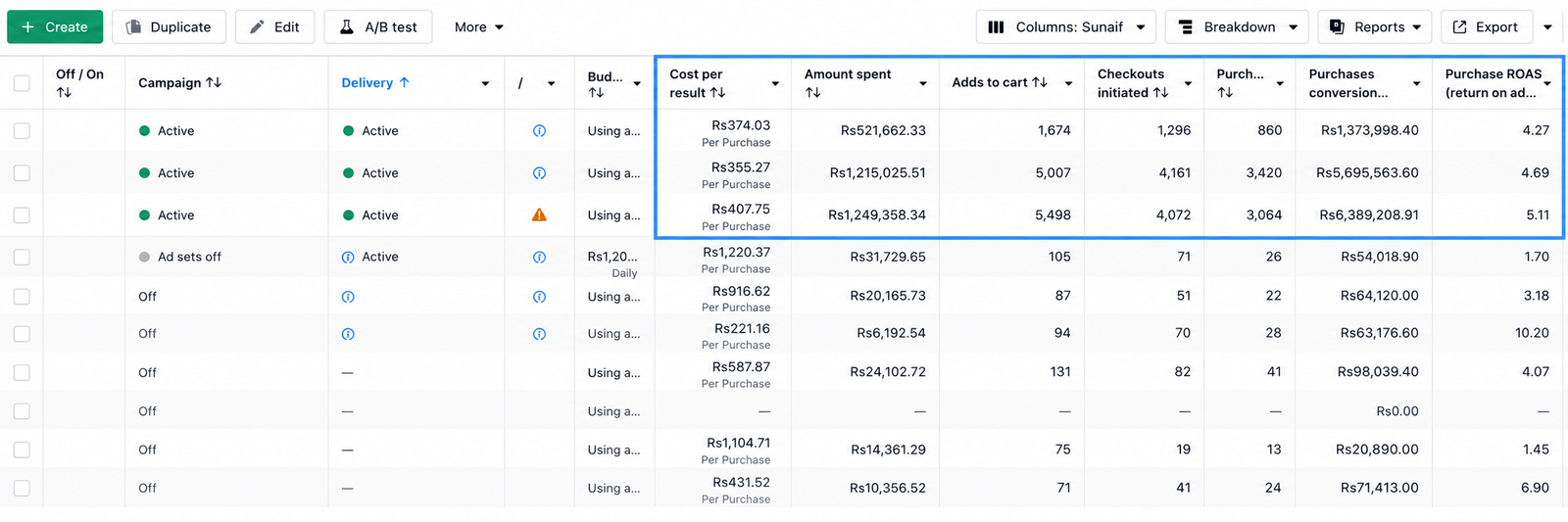
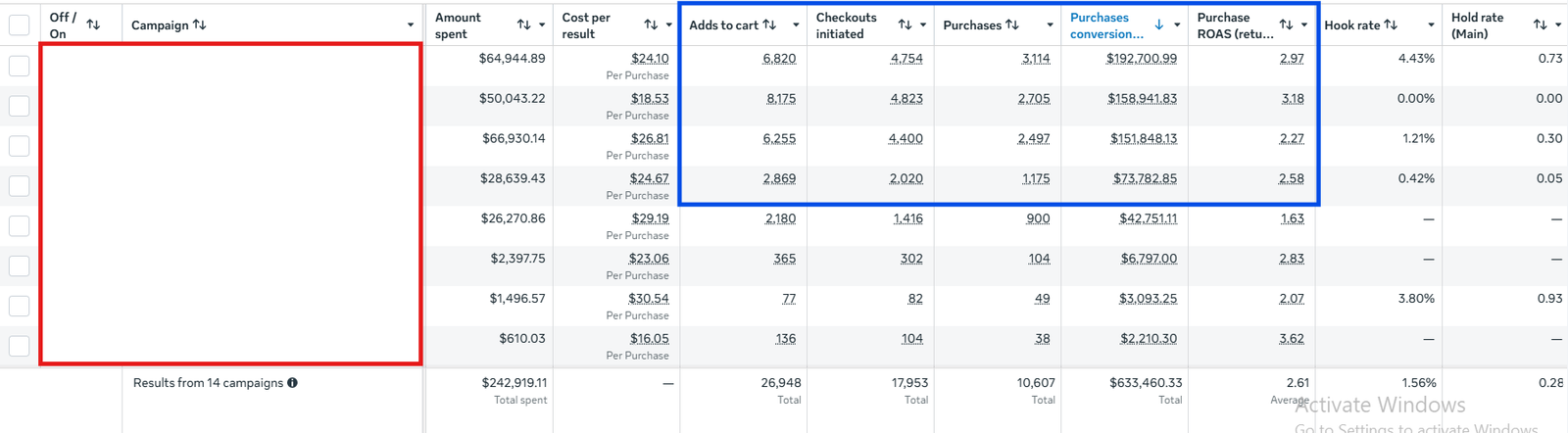
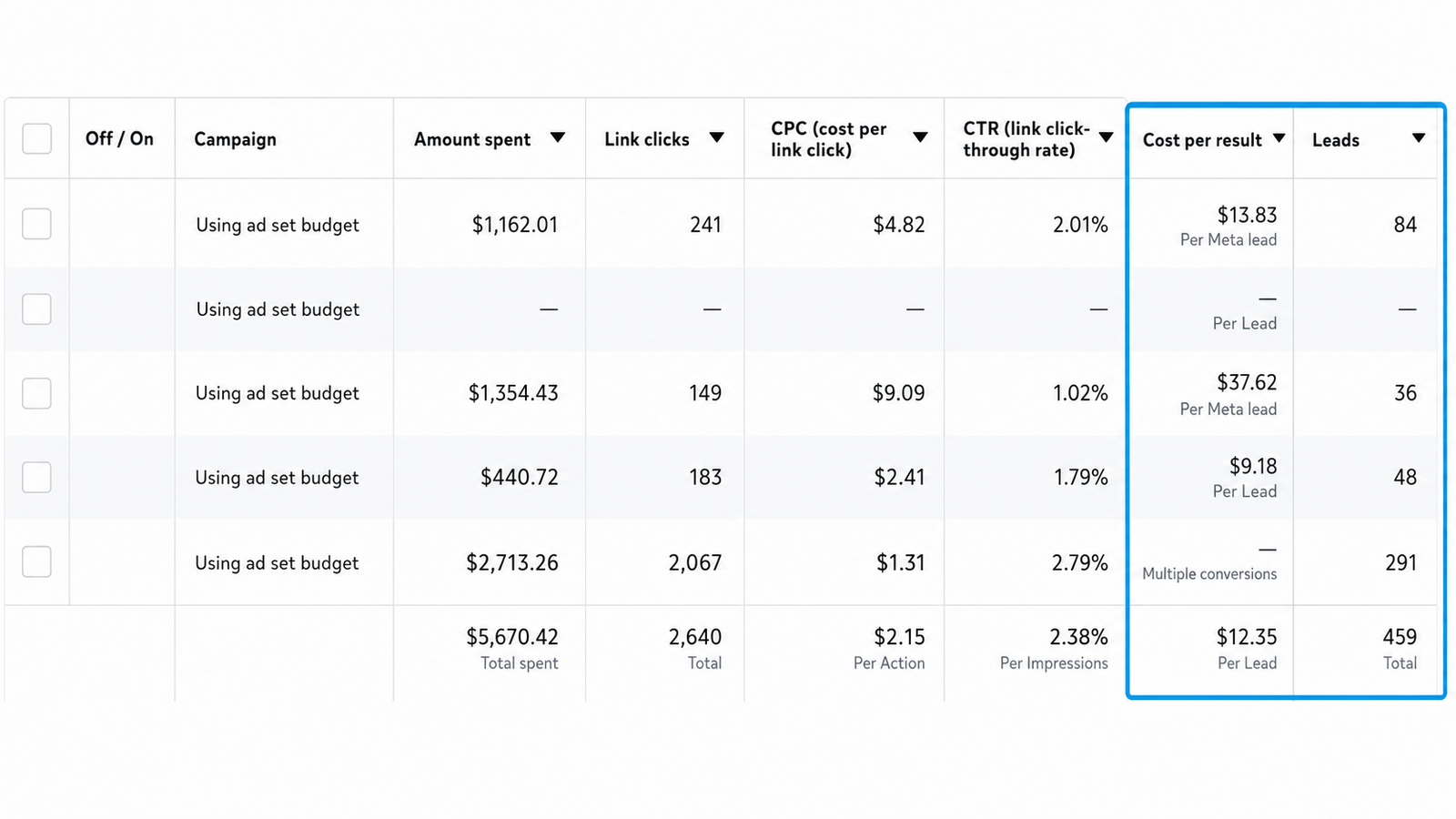
A faith-based ecommerce brand with a small audience, plenty of engagement, and a bigger problem, not enough of it was turning into purchases. I split the funnel by intent, separated product categories, and built retargeting around the people most likely to buy.
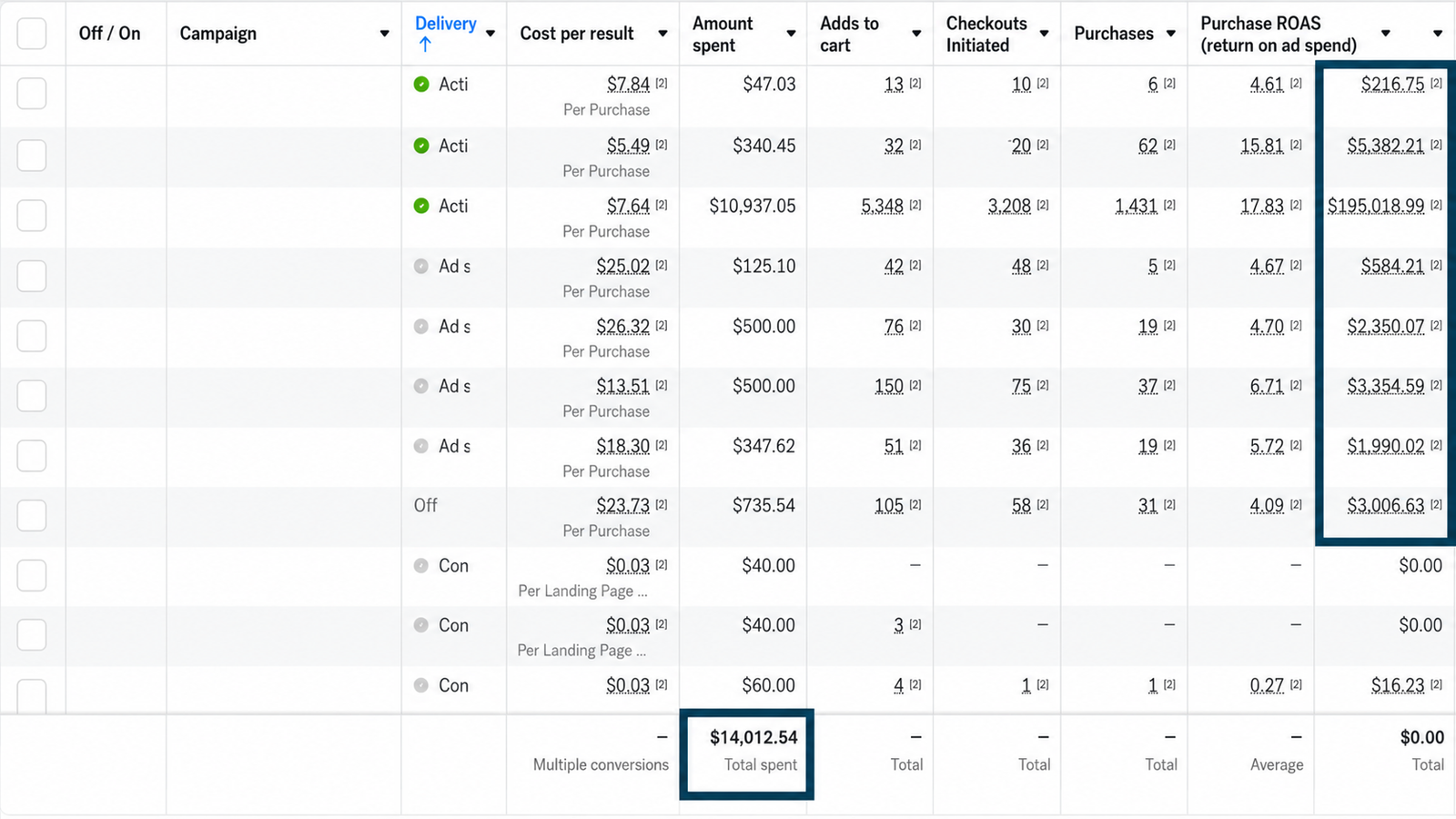
A premium toddler products brand was getting traffic and plenty of add-to-carts, but too many people disappeared before purchase. I tightened the targeting, rebuilt the retargeting and gave hesitant buyers more reasons to trust the brand.
A graphic apparel brand was running dozens of designs across different fandoms, launches and promotions. I built a clearer system for testing products quickly, scaling the designs people actually wanted and cutting spend from the ones that didn’t earn it.
A premium toddler products brand was getting traffic and plenty of add-to-carts, but too many people disappeared before purchase. I tightened the targeting, rebuilt the retargeting and gave hesitant buyers more reasons to trust the brand.
A US home remodelling company was getting clicks, but broad audiences and generic search terms were also bringing in DIY browsers and low intent traffic. I tightened the targeting, focused on local search intent and made trust a much bigger part of the ads.
I DON’T START BY LAUNCHING ADS.
I still care about campaigns, targeting and bids. I just don’t pretend they can fix a weak offer, vague message or messy buying journey on their own.
Sometimes it’s the offer. Sometimes it’s the website. Sometimes it’s the targeting. And sometimes the ads are simply saying nothing interesting.
I spend HOURS on research, mapping the audience, objections, hooks, offers and reasons to buy before asking a designer or editor to make anything. Good creative starts with the thinking, not the format.
Campaigns, audiences and landing pages get clear jobs. Then I test meaningful variables without changing everything at once and creating a mess nobody can learn from.
Let me introduce myself.
I’m Sunaif Siddiqui. I have been running Meta + Google Ads for about 6 years now, obsess over the numbers a little too much, and usually end up caring about the business beyond just the campaigns.
I’ve worked across ecommerce, education, real estate, home services, coworking and a few other corners of the internet. Different businesses, different problems, which is exactly why I don’t believe in copy paste ad strategies.
I’m also annoyingly curious. If something isn’t working, I want to know why — the ad, the offer, the landing page, the audience, whatever it is. I’d rather find the actual problem than keep tweaking campaigns and hoping for the best.
META + GOOGLE ADS ✦
LEAD GEN + ECOMMERCE ✦
CREATIVE STRATEGY × PERFORMANCE ✦
META + GOOGLE ADS ✦
100+ BRANDS WORKED WITH ✦
$150M REVENUE GENERATED
CASE STUDY / FAITH-BASED ECOMMERCE
A faith-based ecommerce brand selling apparel, rosaries, jewellery and accessories to a pretty specific audience.
And that specificity was both the advantage and the problem.
Religious content naturally gets likes, comments and shares. Great for community. Not automatically great for revenue.
You can burn through the obvious interests pretty quickly.
Someone buying a hoodie does not necessarily shop like someone buying a rosary.
A person liking a quote is not necessarily looking to buy anything.
WHAT I NOTICED…
I stopped treating everyone who interacted with the brand as one big audience. Some people were there for the content. Some were browsing. Some had shown actual purchase intent.
THE STRATEGY
Rosaries, apparel and accessories got their own campaigns, messaging and budgets instead of fighting inside one generic setup.
Engagement audiences were useful for building familiarity. Purchase-focused campaigns were reserved for people showing stronger buying signals.
Past purchasers, email lists and engaged users helped build lookalikes, while adjacent interests gave the account room to grow beyond the obvious faith-based audiences.
Focused on purchase-intent signals, not just likes and engagement, to guide budget, creative and campaign decisions.
THE RESULTS
TAP A REPORT TO VIEW IT FULL SIZE
BUT META WASN'T WORKING ALONE
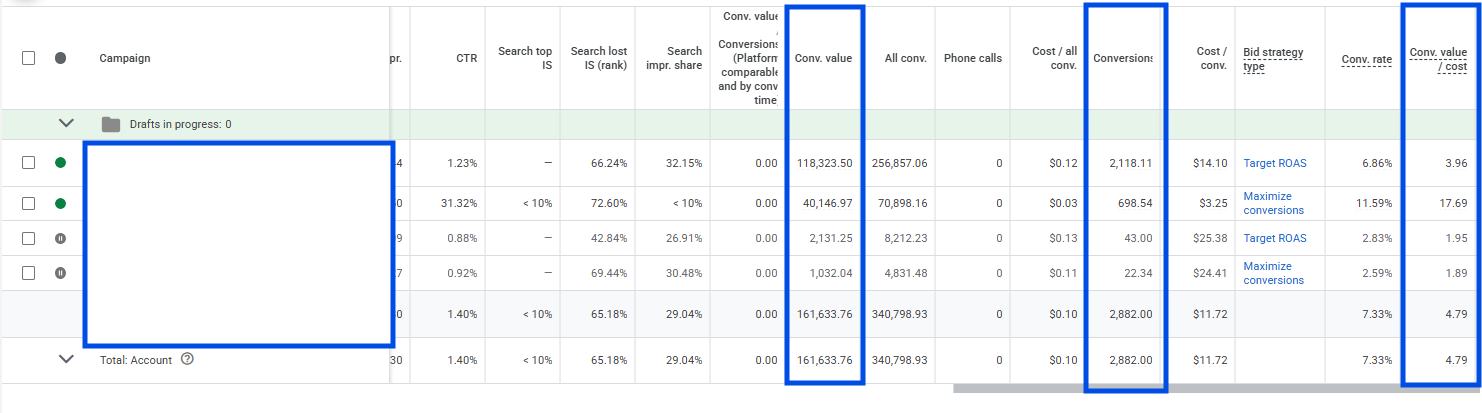
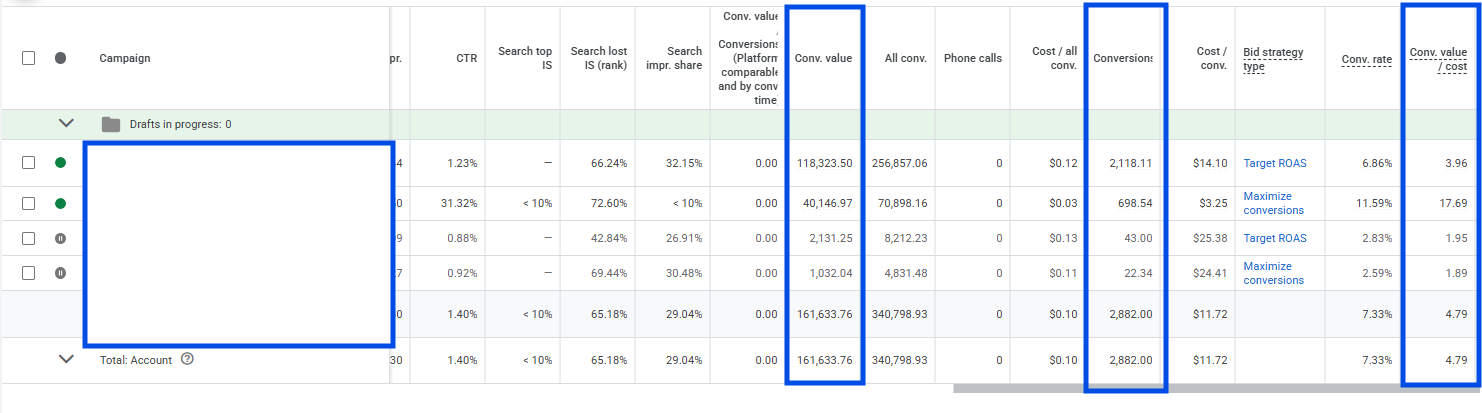
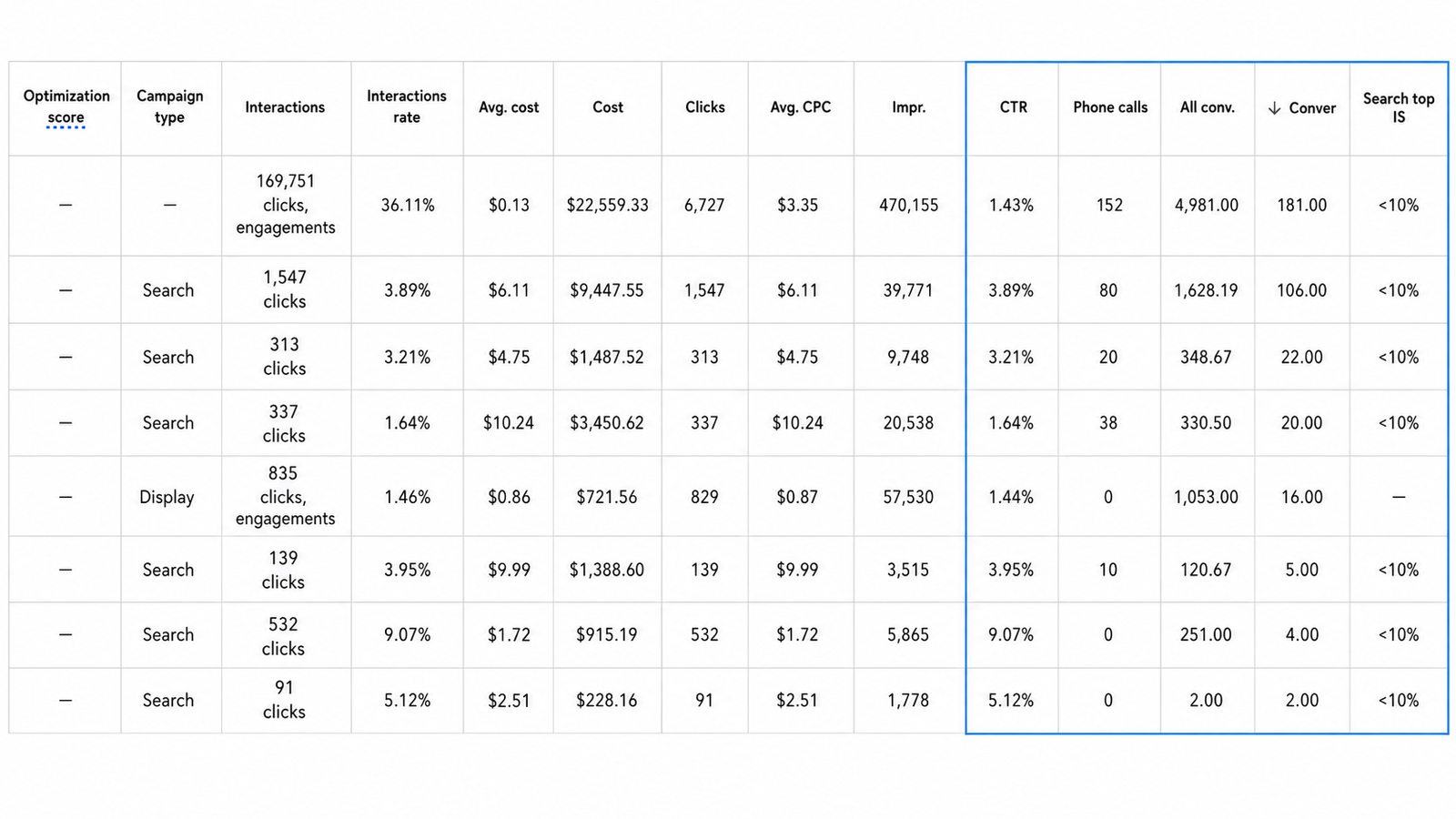
Meta handled discovery, demand generation and retargeting. Google gave us another way to capture people already searching with intent.
MY KEY TAKEAWAY
Niche audiences don’t always need more targeting. Sometimes they need better separation.
High engagement is only impressive when you know what role it’s meant to play.
Premium baby & toddler products, the kind of stuff parents actually think about before buying.
High ticket products, new brand in the market, customers who needed more reassurance than “here’s an ad, now buy.
A faith-based ecommerce brand selling apparel, rosaries, jewellery and accessories to a pretty specific audience. And that specificity was both the advantage and the problem.
People were making it surprisingly far into the journey. They’d browse products, add to cart and even begin checkout.
Then a chunk of them disappeared. The account had three things working against it:
People were making it surprisingly far into the journey. They’d browse products, add to cart and even begin checkout. Then a chunk of them disappeared.
Someone adding a premium product to cart is already giving a strong signal. I didn’t need to keep convincing from scratch. I needed to get better at separating new shoppers from high-intent visitors & give each a different reason to move.
Someone adding a premium baby product to cart is already giving you a pretty strong signal. I didn’t need to keep convincing everyone from scratch. I needed to get better at separating new shoppers from high-intent visitors and give each group a different reason to move.
I stopped treating everyone who interacted with the brand as one big audience with the same buying intent and behavior.
Some people were there for the content. Some were browsing. Some had shown actual purchase intent.
Those people shouldn’t see the same ads, and they definitely shouldn’t get the same share of the budget.
Rosaries, apparel and accessories got their own campaigns, messaging and budgets instead of fighting inside one generic setup.
Engagement audiences were useful for building familiarity. Purchase-focused campaigns were reserved for people showing stronger buying signals.
Prospecting focused on audiences that actually looked like potential buyers, rather than simply anyone who happened to be a parent.
Someone who watched a video got treated differently from someone who added a product to cart or started checkout.
Campaigns weren’t built around one bestseller forever. Accessories, complementary products and bundles created more opportunities to increase the value of each customer.
A faith-based ecommerce brand selling apparel, rosaries, jewellery and accessories to a pretty specific audience. And that specificity was both the advantage and the problem.
Religious content naturally gets likes, comments and shares. Great for community. Not automatically great for revenue.
You can burn through the obvious interests pretty quickly.
Someone buying a hoodie does not necessarily shop like someone buying a rosary.
A person liking a quote is not necessarily looking to buy anything.
Rosaries, apparel and accessories got their own campaigns, messaging and budgets instead of fighting inside one generic setup.
Engagement audiences were useful for building familiarity. Purchase-focused campaigns were reserved for people showing stronger buying signals.
Past purchasers, email lists and engaged users helped build lookalikes, while adjacent interests gave the account room to grow beyond the obvious faith-based audiences.
Focused on purchase intent signals, not just likes and engagement, to guide budget, creative and campaign decisions.
Someone adding a premium baby product to cart is already giving you a pretty strong signal.
I didn’t need to keep convincing everyone from scratch. I needed to get better at separating new shoppers from high-intent visitors and give each group a different reason to move.
Prospecting focused on audiences that actually looked like potential buyers, rather than simply anyone who happened to be a parent.
Someone who watched a video got treated differently from someone who added a product to cart or started checkout.
Testimonials, product proof and clearer reasons to buy helped reduce some of the hesitation around purchasing higher-value baby products online.
Campaigns weren’t built around one bestseller forever. Accessories, complementary products and bundles created more opportunities to increase the value of each customer.
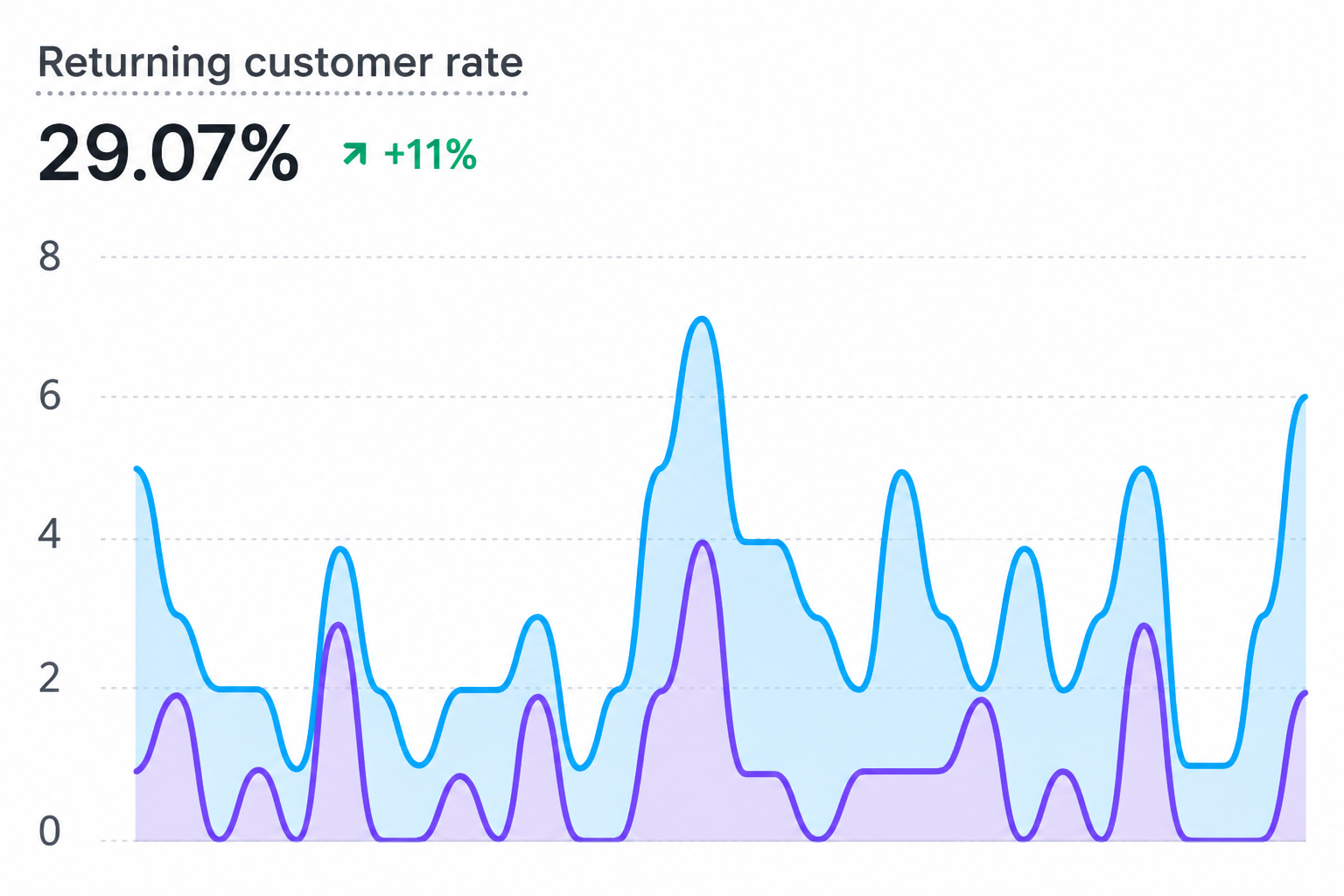
Acquisition gets most of the attention in paid media, but a customer who comes back is worth a lot more than a one-off conversion.
Returning customer rate reached 29.07%, up 111% over the comparison period.
Sometimes the answer isn’t “get more traffic.”
This account already had people raising their hands. The bigger opportunity was figuring out who was closest to buying, removing some of the hesitation, and putting more budget behind the campaigns that proved they could convert.
Wellness and skincare products including face serums, moisturisers, body oils and other self care essentials.
It was a crowded category, which meant looking “nice” was not enough. The ads needed a proper point of view.
Natural. Clean. Organic. Gentle. Premium.
None of those words are bad. The problem is that almost every wellness brand uses them.
The account had three things working against it:
Natural. Clean. Organic. Gentle. Premium. None of those words are bad. The problem is that almost every wellness brand uses them.
A person who already understands the product may only need an offer or reminder. Someone seeing the brand for the first time needs more: the problem it solves, what’s inside it, how it fits into their routine and why it is worth trying. The account needed a better order of operations.
A person who already understands the product may only need an offer or reminder.
Someone seeing the brand for the first time probably needs a little more: the problem it solves, what is inside it, how it fits into their routine and why this product is worth trying.
The account needed a better order of operations.
The messaging moved away from generic wellness claims and focused more on product experience, ingredient quality, routines and the practical reason someone would use each item.
Lifestyle imagery, product close-ups, ingredient-led creatives, customer content and educational formats were rotated instead of relying on one visual style until it stopped working.
Cold audiences saw content that explained the product, the use case and the problem it solved before being pushed straight towards checkout.
Browsers saw education. Product viewers saw proof. Cart abandoners saw stronger reasons to finish the purchase
A person who already understands the product may only need an offer or reminder. Someone seeing the brand for the first time probably needs a little more.
They don’t know the product yet. They need context before they’re ready to make a decision.
They already understand the product. They may only need a stronger reason to complete the purchase.
The account needed a better order of operations.
The messaging moved away from generic wellness claims and focused more on product experience, ingredient quality, routines and the practical reason someone would use each item.
Lifestyle imagery, product close-ups, ingredient-led creatives, customer content and educational formats were rotated instead of relying on one visual style until it stopped working.
Cold audiences saw content that explained the product, the use case and the problem it solved before being pushed straight towards checkout.
Ad copy, targeting and landing page messaging were aligned with the areas the company actually served instead of treating the entire market as one audience.
The ads talked about ingredients and benefits, but not in a way that made the brand feel meaningfully different.
The same visual styles kept appearing, so performance gradually dropped as audiences saw more of the same.
Some products needed explanation: What does it do? Who is it for? How do you use it? Why trust it?
They don’t know the product yet. They need context before they’re ready to make a decision.
They already understand the product. They may only need a stronger reason to complete the purchase.
The messaging moved away from generic wellness claims and focused more on product experience, ingredient quality, routines and the practical reason someone would use each item.
Lifestyle imagery, product close-ups, ingredient-led creatives, customer content and educational formats were rotated instead of relying on one visual style until it stopped working.
Cold audiences saw content that explained the product, the use case and the problem it solved before being pushed straight towards checkout.
Browsers saw education. Product viewers saw proof. Cart abandoners saw stronger reasons to finish the purchase.
In a crowded category, vague language gets expensive.
People do not need another brand telling them a product is “natural.” They need to understand what it does, why it is relevant to them and why this version is worth choosing.
Once the ads started answering those questions properly, the numbers followed.
CASE STUDY / FAITH-BASED ECOMMERCE
A faith-based ecommerce brand selling apparel, rosaries, jewellery and accessories to a pretty specific audience.
And that specificity was both the advantage and the problem.
Religious content naturally gets likes, comments and shares. Great for community. Not automatically great for revenue.
You can burn through the obvious interests pretty quickly.
Someone buying a hoodie does not necessarily shop like someone buying a rosary.
A person liking a quote is not necessarily looking to buy anything.
WHAT I NOTICED…
I stopped treating everyone who interacted with the brand as one big audience. Some people were there for the content. Some were browsing. Some had shown actual purchase intent.
THE STRATEGY
Rosaries, apparel and accessories got their own campaigns, messaging and budgets instead of fighting inside one generic setup.
Engagement audiences were useful for building familiarity. Purchase-focused campaigns were reserved for people showing stronger buying signals.
Past purchasers, email lists and engaged users helped build lookalikes, while adjacent interests gave the account room to grow beyond the obvious faith-based audiences.
Focused on purchase-intent signals, not just likes and engagement, to guide budget, creative and campaign decisions.
THE RESULTS
TAP A REPORT TO VIEW IT FULL SIZE

BUT META WASN'T WORKING ALONE
Meta handled discovery, demand generation and retargeting. Google gave us another way to capture people already searching with intent.
MY KEY TAKEAWAY
Niche audiences don’t always need more targeting. Sometimes they need better separation.
High engagement is only impressive when you know what role it’s meant to play.
A faith-based ecommerce brand selling apparel, rosaries, jewellery and accessories to a pretty specific audience. And that specificity was both thenadvantage and the problem.
Religious content naturally gets likes, comments and shares. Great for community. Not automatically great for revenue.
I stopped treating everyone who interacted with the brand as one big audience. Some people were there for the content. Some were browsing. Some had shown actual purchase intent.
Meta handled discovery, demand generation and retargeting. Google gave us another way to capture people already searching with intent.
Niche audiences don’t always need more targeting. Sometimes they need better separation.
And high engagement is only impressive when you know what role it’s meant to play.
Home remodelling services across the US, kitchens, bathrooms and larger renovation projects. These aren’t impulse purchases. People compare contractors, check reviews, look for licences and take their time.
Getting traffic wasn’t especially difficult. Getting the right homeowners at the right time was the harder part. The account had three things working against it:
Getting traffic wasn’t especially difficult. Getting the right homeowners at the right time was the harder part.
Someone searching “kitchen design ideas” and someone searching “kitchen remodelling contractor near me” may both click an ad. Only one of them is giving you a strong reason to believe they’re ready to speak.
Someone searching “kitchen design ideas” and someone searching “kitchen remodelling contractor near me” may both click an ad. Only one of them is giving you a strong reason to believe they’re ready to speak. The account needed fewer vague signals and more focus on people showing actual project intent.
Google campaigns focused more heavily on local, service specific searches with clear commercial intent. Broad terms were reduced, and irrelevant searches were filtered through negative keywords.
Ad copy, targeting and landing page messaging were aligned with the areas the company actually served instead of treating the entire market as one audience.
Website visitors, engaged users and relevant lookalikes gave Meta stronger signals than broad home improvement interests alone.
Someone searching “kitchen design ideas” and someone searching “kitchen remodelling contractor near me” may both click an ad.
The account needed fewer vague signals and more focus on people showing actual project intent.
Google campaigns focused more heavily on local, service-specific searches with clear commercial intent. Broad terms were reduced, and irrelevant searches were filtered through negative keywords.
Ad copy, targeting and landing page messaging were aligned with the areas the company actually served instead of treating the entire market as one broad audience from the start.
Google campaigns focused more heavily on local, service-specific searches with clear commercial intent. Broad terms were reduced, and irrelevant searches were filtered through negative keywords.
Ad copy, targeting and landing page messaging were aligned with the areas the company actually served instead of treating the entire market as one audience.
Generic home improvement keywords attracted people looking for ideas, tutorials or DIY products instead of someone ready to hire a contractor.
Targeting anyone interested in home improvement sounds sensible until a large chunk of the audience is there for décor inspiration rather than an actual renovation.
A remodelling project involves money, disruption and risk. Without proof, warranties, reviews and completed work, prospects have plenty of reasons to hesitate.
Google campaigns focused more heavily on
local, service-specific searches
with clear commercial intent. Broad terms were
reduced, and irrelevant searches were filtered
through negative keywords.
Ad copy, targeting and landing page messaging
were aligned with the areas the company
actually served instead of treating the
entire market as one audience.
Website visitors, engaged users and relevant
lookalikes gave Meta stronger signals than
broad home improvement interests alone.
Before-and-after work, customer reviews,
warranties, licences and service guarantees
became part of the message instead of
information people had to hunt for later.
Meta helped reach homeowners before they necessarily started searching.
Google focused on the people already typing in the service they needed, which meant the keywords, location and search intent had to be much tighter.
Home services advertising gets expensive very quickly when the targeting is vague.
“Interested in home improvement” is not the same thing as “owns a home, needs a contractor and is ready to talk.”
The closer the campaigns got to that second person, the better the account performed.